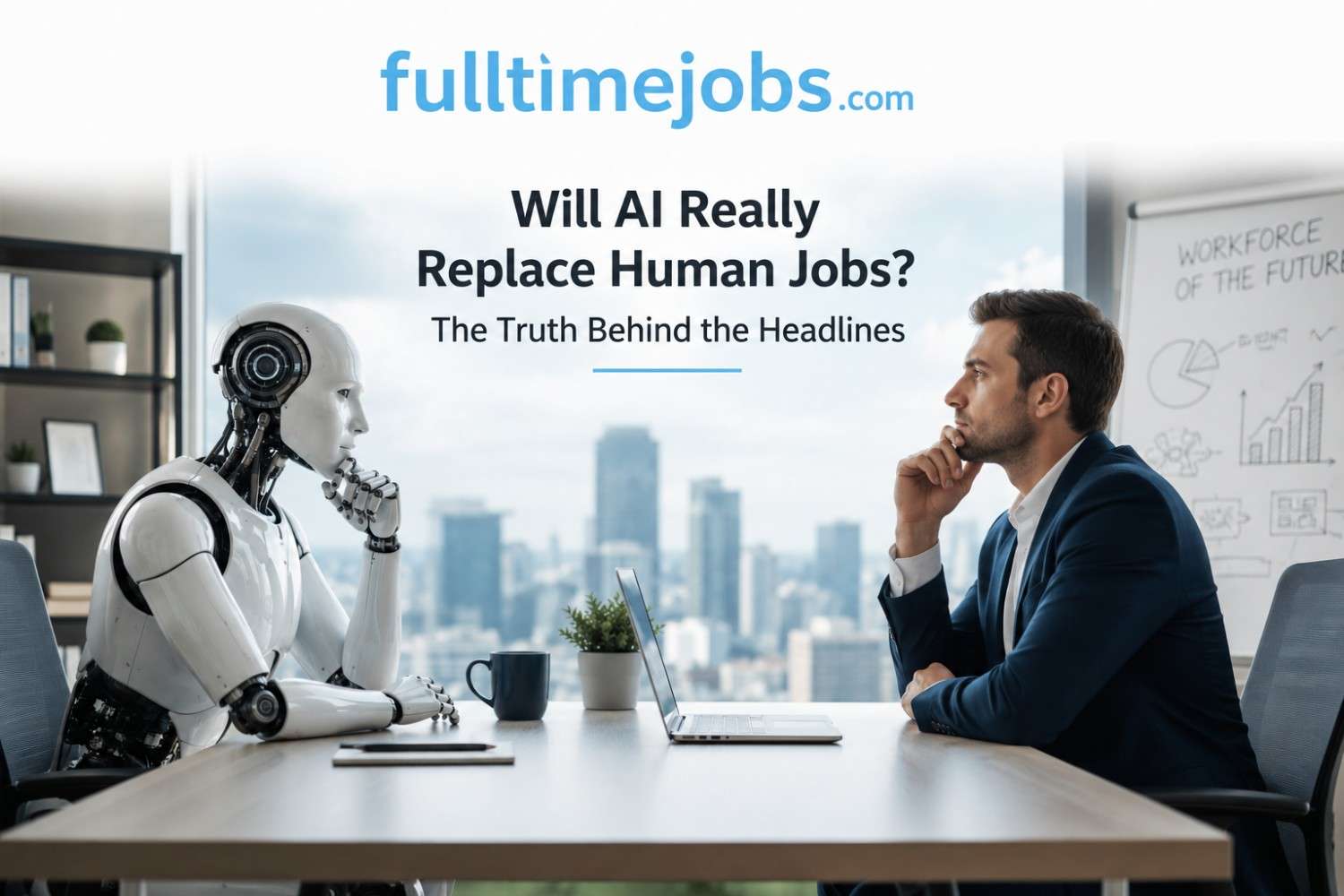
Artificial Intelligence (AI) has become one of the most talked-about technologies of the 21st century. From ChatGPT and self-driving vehicles to automated customer support and advanced data analysis tools, AI is transforming industries at an unprecedented pace. As businesses increasingly adopt AI-powered solutions, a common concern has emerged among workers worldwide: Will AI replace human jobs?
Headlines often paint a dramatic picture, suggesting that millions of jobs could disappear in the coming years. While there is some truth behind these concerns, the reality is far more complex. AI is not simply eliminating jobs—it is also creating new opportunities, changing the nature of work, and reshaping the skills that employers value.
In this article, we'll explore the real impact of AI on employment, which jobs are most at risk, what new opportunities are emerging, and how workers can prepare for the future.
Understanding the Rise of AI
Artificial Intelligence refers to computer systems capable of performing tasks that traditionally required human intelligence. These tasks include learning, problem-solving, decision-making, language understanding, and pattern recognition.
Over the past few years, AI has become more powerful due to advancements in machine learning, cloud computing, and access to massive amounts of data. Organizations now use AI to automate repetitive tasks, improve efficiency, reduce costs, and enhance customer experiences.
While these benefits are attractive to employers, they have also sparked fears about widespread job displacement.
Which Jobs Are Most Vulnerable to AI?
AI is particularly effective at handling repetitive, predictable, and data-driven tasks. As a result, jobs involving routine activities are more likely to be affected.
Some examples include:
- Data entry operators
- Basic customer support representatives
- Telemarketing agents
- Administrative assistants performing repetitive tasks
- Basic bookkeeping and accounting roles
- Manufacturing assembly line workers
- Simple content generation tasks
For example, many companies now use AI chatbots to answer common customer inquiries. Similarly, automated software can process invoices, manage schedules, and generate reports much faster than humans.
However, this does not necessarily mean these jobs will disappear completely. In many cases, AI acts as a tool that assists workers rather than replacing them entirely.
Jobs That AI Cannot Easily Replace
Despite its capabilities, AI still struggles with tasks that require human creativity, empathy, emotional intelligence, and complex decision-making.
Professions that are likely to remain highly dependent on human skills include:
- Teachers and educators
- Healthcare professionals
- Psychologists and counselors
- Social workers
- Human resource professionals
- Business leaders and managers
- Creative artists and designers
- Skilled tradespeople
- Lawyers handling complex legal matters
A teacher, for example, does much more than deliver information. They inspire, motivate, mentor, and adapt to the emotional and educational needs of students. These human qualities are difficult for AI to replicate.
Similarly, healthcare professionals rely on empathy, trust, and judgment when interacting with patients.
AI Is Creating New Jobs Too
One of the biggest misconceptions about AI is that it only destroys jobs. Throughout history, technological revolutions have often created new career opportunities while eliminating outdated roles.
The rise of AI has already generated demand for positions such as:
- AI Engineers
- Machine Learning Specialists
- Data Scientists
- AI Product Managers
- AI Trainers
- Prompt Engineers
- Cybersecurity Experts
- AI Ethics Specialists
- Automation Consultants
Many organizations also need professionals who can manage, monitor, and improve AI systems.
Just as the internet created entirely new industries and careers, AI is expected to create jobs that may not even exist today.
How AI Is Changing Existing Jobs
For many workers, the future is not about replacement but transformation.
Consider software developers. AI coding assistants can now generate code, identify bugs, and suggest improvements. However, developers are still needed to design solutions, review outputs, understand business requirements, and ensure software quality.
Similarly, marketing professionals use AI tools to generate content ideas, analyze customer behavior, and automate campaigns. Yet strategic planning and creative thinking remain human responsibilities.
In many industries, AI is becoming a productivity tool that helps employees perform their jobs more efficiently.
The Skills That Will Matter Most
As AI automates routine tasks, employers are placing greater value on uniquely human skills.
These include:
Critical Thinking
The ability to analyze information and make informed decisions.
Creativity
Generating original ideas and innovative solutions.
Emotional Intelligence
Understanding and managing emotions in workplace interactions.
Communication Skills
Effectively sharing ideas and collaborating with others.
Adaptability
Learning new technologies and adjusting to changing work environments.
Leadership
Guiding teams and making strategic decisions.
Workers who combine these human skills with AI literacy will be in a strong position to succeed in the future job market.
The Environmental Impact of AI
While discussions about AI often focus on employment, its environmental impact is becoming an increasingly important issue.
Training and operating large AI models require significant computing power. This demand has led to the rapid growth of data centers around the world.
Some environmental concerns include:
- High electricity consumption
- Increased water usage for cooling systems
- Carbon emissions from energy-intensive infrastructure
- Electronic waste from hardware upgrades
As AI adoption expands, technology companies face growing pressure to invest in renewable energy and sustainable computing practices.
However, AI can also contribute positively to environmental efforts.
For example, AI is being used to:
- Improve energy efficiency in buildings
- Optimize transportation routes
- Reduce industrial waste
- Monitor climate change
- Improve renewable energy management
The long-term environmental impact of AI will depend largely on how responsibly organizations develop and deploy these technologies.
Should Workers Be Worried?
It is natural to feel concerned about technological change. Similar fears emerged during the Industrial Revolution, the rise of computers, and the growth of the internet.
While some jobs may decline, history suggests that economies adapt over time. New industries emerge, new skills become valuable, and new opportunities are created.
Rather than fearing AI, workers should focus on understanding how it can enhance their careers.
Learning AI tools, improving technical skills, and developing strong human-centered abilities can help individuals remain competitive in a changing job market.
Conclusion
The idea that AI will completely replace human workers is often exaggerated. While AI will automate certain tasks and transform some professions, it is unlikely to eliminate the need for human talent altogether.
Instead, AI is changing the way people work. Jobs that involve repetitive tasks may decline, but roles requiring creativity, empathy, leadership, and complex problem-solving will remain essential.
At the same time, AI is creating entirely new career opportunities and helping organizations become more productive.
The future belongs not to AI alone, but to people who can effectively work alongside it. By embracing continuous learning and adapting to technological change, workers can turn AI from a threat into a powerful career advantage.
|