Introduction
The world of work has undergone a massive transformation over the past decade. With the rise of digital platforms, remote work, and changing workforce expectations, professionals today have more choices than ever before. Two of the most prominent career paths are gig economy jobs and full-time employment.
While traditional full-time jobs have long been considered stable and secure, the gig economy is gaining popularity for its flexibility and independence. But the real question remains: which option is better in 2026?
The answer depends on your career goals, financial needs, and lifestyle preferences. Let’s explore both in detail.
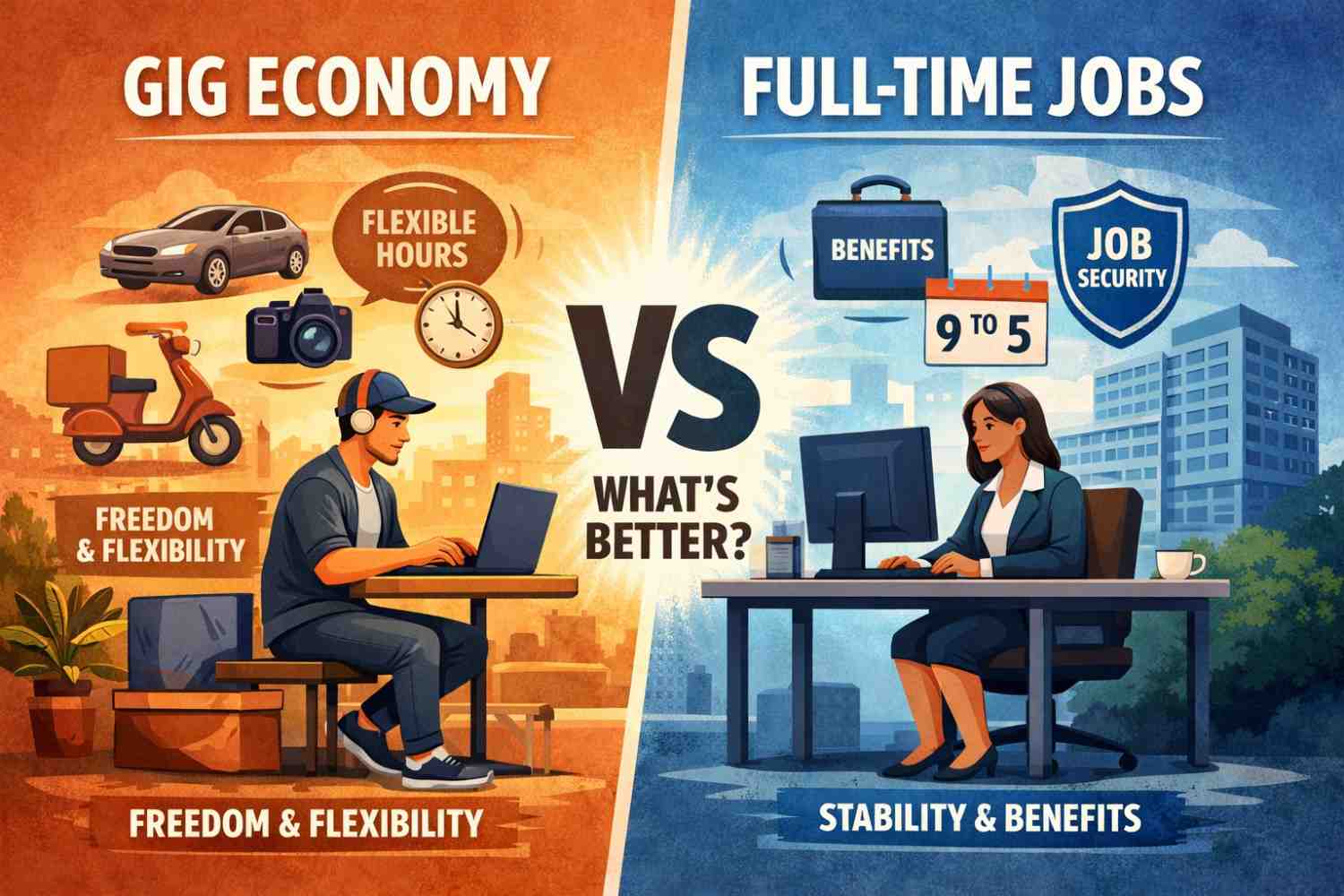
What is the Gig Economy?
The gig economy refers to a labor market where individuals work on short-term contracts, freelance projects, or independent assignments instead of permanent jobs.
Examples of Gig Jobs:
-
Freelance graphic design, content writing, or web development
-
Ride-sharing or delivery services
-
Consulting and project-based work
-
Online tutoring or digital marketing
Gig workers are typically paid per task, project, or hour rather than receiving a fixed monthly salary.
What is a Full-Time Job?
A full-time job is a traditional employment model where an individual works for a company on a permanent basis, usually with fixed working hours and a steady salary.
Typical Features:
-
Monthly salary
-
Employee benefits (insurance, PF, bonuses)
-
Fixed work schedule
-
Long-term job security
Full-time roles are still the dominant employment model, especially in corporate sectors.
Key Differences Between Gig Economy and Full-Time Jobs
1. Flexibility vs Stability
One of the biggest advantages of the gig economy is flexibility. You can choose when, where, and how much you work.
-
Gig Jobs: High flexibility, work on your own terms
-
Full-Time Jobs: Fixed schedules, less freedom
However, flexibility comes at a cost. Full-time jobs offer stability and predictable income, which gig roles often lack.
2. Income Structure
Income is another major differentiator.
-
Gig Economy: Variable income depending on workload and demand
-
Full-Time Jobs: Fixed monthly salary
Gig workers can sometimes earn more than full-time employees, especially in high-demand skills like tech or consulting. However, income inconsistency can be stressful.
3. Job Security
Job security is where full-time employment clearly stands out.
-
Gig Jobs: No guaranteed work or long-term security
-
Full-Time Jobs: Stable employment with contracts
In uncertain economic conditions, full-time employees generally feel more secure compared to gig workers.
4. Benefits and Perks
Full-time jobs come with several benefits that gig workers usually don’t receive.
Full-Time Benefits:
-
Health insurance
-
Paid leaves
-
Retirement benefits
-
Bonuses and incentives
Gig Economy Reality:
Gig workers must manage their own insurance, taxes, and savings.
5. Work-Life Balance
Interestingly, both models offer different types of work-life balance.
-
Gig Economy: Better control over time but may require working irregular hours
-
Full-Time Jobs: Structured routine but limited flexibility
Some gig workers end up working more hours to maintain income, which can affect balance.
Advantages of the Gig Economy
1. Freedom and Independence
You are your own boss. You can choose projects that match your interests and skills.
2. Multiple Income Sources
Gig workers can diversify income streams by working with multiple clients.
3. Skill Development
Working on different projects helps build a wide range of skills quickly.
4. Remote Opportunities
Most gig jobs can be done from anywhere, making them ideal for remote work lovers.
Disadvantages of the Gig Economy
-
Unstable income
-
No job security
-
Lack of benefits
-
High competition
-
Self-discipline required
Advantages of Full-Time Jobs
1. Financial Stability
A fixed salary ensures predictable income and easier financial planning.
2. Employee Benefits
Health insurance, paid leaves, and retirement plans provide long-term security.
3. Career Growth
Structured promotions and career paths help in long-term development.
4. Team Collaboration
Working in teams helps build professional networks and soft skills.
Disadvantages of Full-Time Jobs
-
Limited flexibility
-
Fixed working hours
-
Office politics
-
Slower income growth in some cases
Which is Better in 2026?
There is no one-size-fits-all answer. The “better” option depends on your priorities.
Choose Gig Economy If You Want:
-
Flexibility and freedom
-
Higher earning potential (with skills)
-
Remote work lifestyle
-
Multiple income streams
Choose Full-Time Jobs If You Want:
-
Stability and job security
-
Fixed income
-
Career growth within an organization
-
Employee benefits
The Rise of Hybrid Careers
One of the most interesting trends in 2026 is the rise of hybrid careers, where professionals combine both models.
For example:
-
A full-time employee doing freelance work on weekends
-
A freelancer taking long-term contract roles
-
Professionals building side hustles
This approach offers the best of both worlds—security and flexibility.
Future Trends to Watch
-
Skills-based hiring is making gig work more mainstream
-
Remote work is blurring the line between gig and full-time jobs
-
AI and automation are creating more freelance opportunities
-
Companies are increasingly hiring contract-based talent
The gig economy is expected to grow significantly, but full-time jobs will continue to remain relevant.
Conclusion
The debate between gig economy and full-time jobs is not about which is universally better—it’s about what works best for you.
If you value freedom and flexibility, the gig economy is a great choice. If you prefer stability and structured growth, full-time employment is more suitable.
In today’s evolving job market, the smartest approach may be to stay adaptable, continuously upgrade your skills, and remain open to both opportunities. |