The job search process has changed dramatically in recent years. Artificial Intelligence (AI) is no longer a futuristic concept—it has become a practical tool that helps job seekers find opportunities, create stronger resumes, prepare for interviews, and even plan their careers.
Whether you are a recent graduate, an experienced professional, or someone looking for a career change, AI tools can save time and improve your chances of landing the right job. In this article, we explore the best AI tools for job seekers and how they can support every stage of the job search journey.
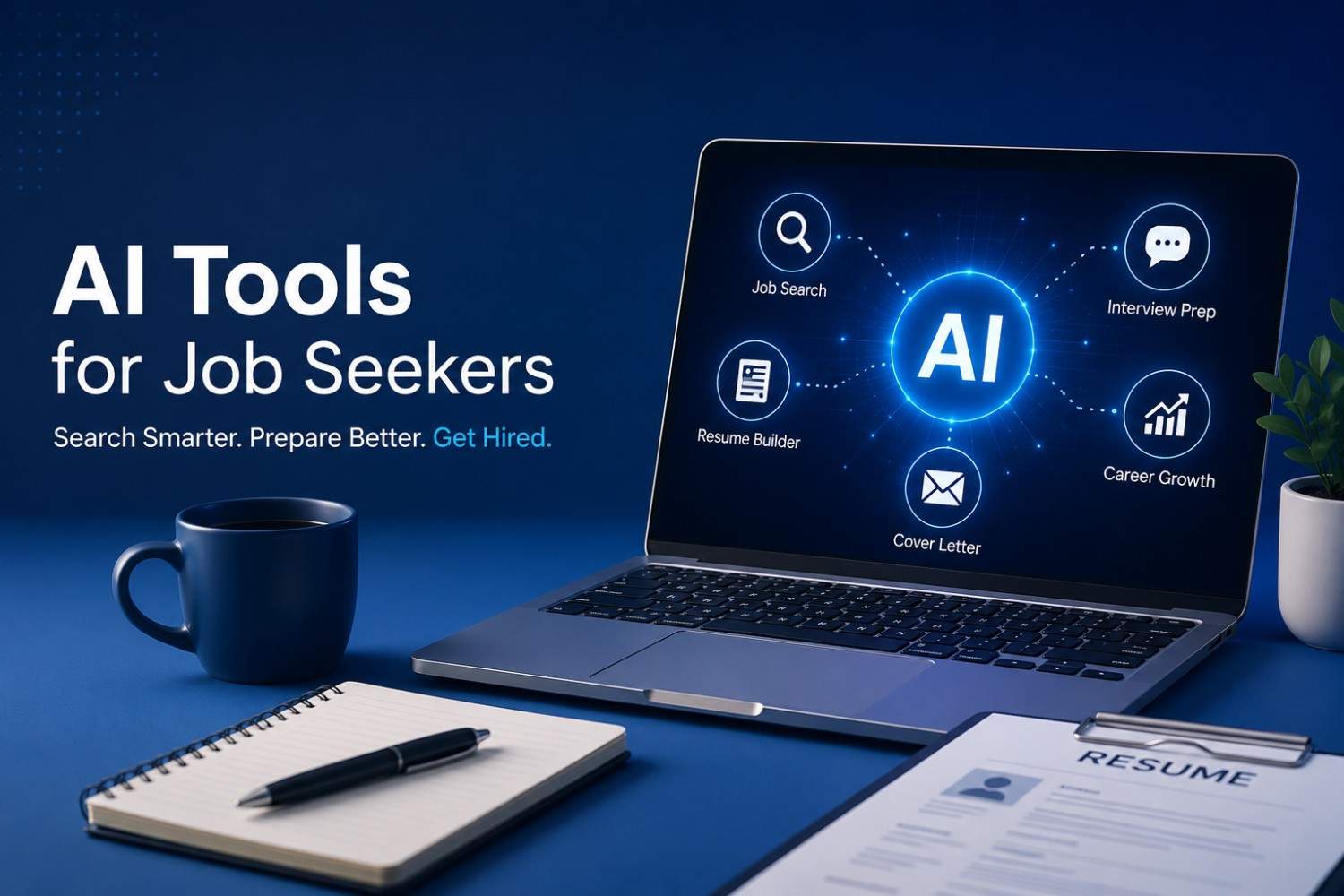
Why AI Matters for Job Seekers
Searching for jobs can be time-consuming and overwhelming. Job seekers often spend hours browsing listings, customizing resumes, writing cover letters, and preparing for interviews.
AI helps simplify these tasks by:
- Matching candidates with relevant job opportunities
- Optimizing resumes for Applicant Tracking Systems (ATS)
- Generating personalized cover letters
- Providing interview practice and feedback
- Identifying skill gaps and career opportunities
By using AI strategically, job seekers can focus more on networking and interviews while reducing the time spent on repetitive tasks.
AI Tools for Finding Jobs
1. LinkedIn AI Features
LinkedIn has integrated AI-powered recommendations to help users discover relevant job opportunities based on their experience, skills, and interests.
Benefits include:
- Personalized job recommendations
- Skill-based job matching
- Suggested career paths
- Networking recommendations
Maintaining a complete and updated LinkedIn profile improves the accuracy of these recommendations.
2. ChatGPT
ChatGPT has become one of the most popular AI assistants for job seekers.
You can use ChatGPT to:
- Search for job opportunities in specific industries
- Generate networking messages
- Research companies
- Analyze job descriptions
- Create customized application materials
For example, a job seeker can paste a job description into ChatGPT and ask for a summary of key requirements before applying.
3. AI-Powered Job Boards
Many modern job portals now use AI algorithms to recommend jobs based on user profiles and previous applications.
These platforms analyze factors such as:
- Skills
- Education
- Work experience
- Career interests
- Preferred locations
As a result, job seekers receive more relevant opportunities without manually searching through hundreds of listings.
AI Tools for Resume Writing
4. Resume Builders with AI Assistance
AI-powered resume builders help users create professional resumes quickly.
Popular features include:
- Resume templates
- Skills recommendations
- ATS optimization
- Industry-specific suggestions
- Automated content generation
These tools can identify missing sections and suggest improvements that increase the chances of passing automated screening systems.
5. ChatGPT for Resume Optimization
ChatGPT can significantly improve resume quality.
Examples of tasks include:
- Rewriting job descriptions into achievement-focused bullet points
- Highlighting transferable skills
- Improving readability
- Tailoring resumes to specific job postings
Instead of writing:
"Responsible for managing projects."
AI can help transform it into:
"Managed cross-functional projects that improved operational efficiency by 20% and reduced delivery timelines."
This creates a stronger impact for recruiters.
AI Tools for Cover Letter Creation
6. AI Cover Letter Generators
Writing a unique cover letter for every application can be challenging.
AI-powered cover letter tools can:
- Generate personalized cover letters
- Match content with job requirements
- Highlight relevant experience
- Improve grammar and tone
While AI provides a strong starting point, candidates should always review and personalize the content before submission.
7. ChatGPT for Customized Cover Letters
Job seekers can paste a job description and ask ChatGPT to create a tailored cover letter.
For example:
"Write a cover letter for a Software Engineer role emphasizing my experience with cloud computing and Python development."
The result can save significant time while maintaining relevance to the role.
AI Tools for Interview Preparation
8. AI Mock Interview Platforms
Interview preparation is one of the most valuable uses of AI.
Modern AI interview tools can:
- Simulate interview scenarios
- Generate role-specific questions
- Evaluate responses
- Provide improvement suggestions
These platforms help candidates build confidence before facing real interviews.
9. ChatGPT for Interview Practice
ChatGPT can act as a virtual interviewer.
Users can ask:
- "Conduct a Product Manager interview."
- "Ask me behavioral interview questions."
- "Evaluate my answer using the STAR method."
This allows candidates to practice anytime and improve their communication skills.
10. AI Video Interview Feedback Tools
Some AI platforms analyze video interview recordings and provide feedback on:
- Speaking pace
- Clarity
- Confidence
- Eye contact
- Body language
Such insights help candidates improve their presentation skills and perform better during interviews.
AI for Career Development
11. Skill Gap Analysis
AI tools can compare a candidate's profile with current market demands and identify missing skills.
For example, a software developer interested in cloud engineering may receive recommendations to learn:
- AWS
- Azure
- Kubernetes
- Terraform
This helps job seekers make informed learning decisions.
12. Personalized Learning Recommendations
Many learning platforms use AI to recommend courses based on career goals.
Benefits include:
- Customized learning paths
- Progress tracking
- Industry-relevant certifications
- Skill-based recommendations
This creates a more efficient approach to professional development.
Best Practices When Using AI for Job Search
While AI offers powerful advantages, job seekers should follow a few important guidelines:
Personalize Everything
Never submit AI-generated resumes or cover letters without reviewing them. Recruiters can often recognize generic content.
Verify Information
AI-generated suggestions may occasionally contain inaccuracies. Always verify company details, job requirements, and career advice.
Highlight Authentic Achievements
Use AI to improve wording but ensure that all accomplishments and experiences are accurate and truthful.
Maintain a Human Touch
Employers hire people, not AI-generated profiles. Networking, communication skills, and genuine enthusiasm remain critical to job search success.
The Future of AI in Recruitment
AI will continue to play an increasingly important role in recruitment and career development.
Future advancements may include:
- Hyper-personalized job recommendations
- AI career coaches
- Automated skills assessments
- Predictive career planning
- Real-time interview coaching
Job seekers who learn how to effectively use AI tools today will be better positioned to compete in tomorrow's job market.
Conclusion
AI has transformed the way people search for jobs, create resumes, write cover letters, and prepare for interviews. Tools such as ChatGPT, AI resume builders, job-matching platforms, and interview preparation software can significantly improve efficiency and increase the likelihood of success.
However, AI should be viewed as a powerful assistant rather than a replacement for personal effort. The most successful job seekers combine AI-driven insights with authentic experiences, strong communication skills, and strategic networking.
By leveraging the right AI tools throughout the job search process, candidates can save time, make smarter career decisions, and gain a competitive advantage in today's evolving employment landscape. |