The job market in 2026 is faster, more competitive, and increasingly digital. Traditional job search methods—manually applying to dozens of openings, tweaking resumes one by one, and waiting weeks for responses—are no longer efficient. Artificial Intelligence (AI) has transformed the hiring landscape, and job seekers who leverage AI tools gain a significant advantage.
From resume optimization to interview preparation and personalized job recommendations, AI can help you find better opportunities in less time. This guide explains how to optimize your job search using AI effectively and strategically.
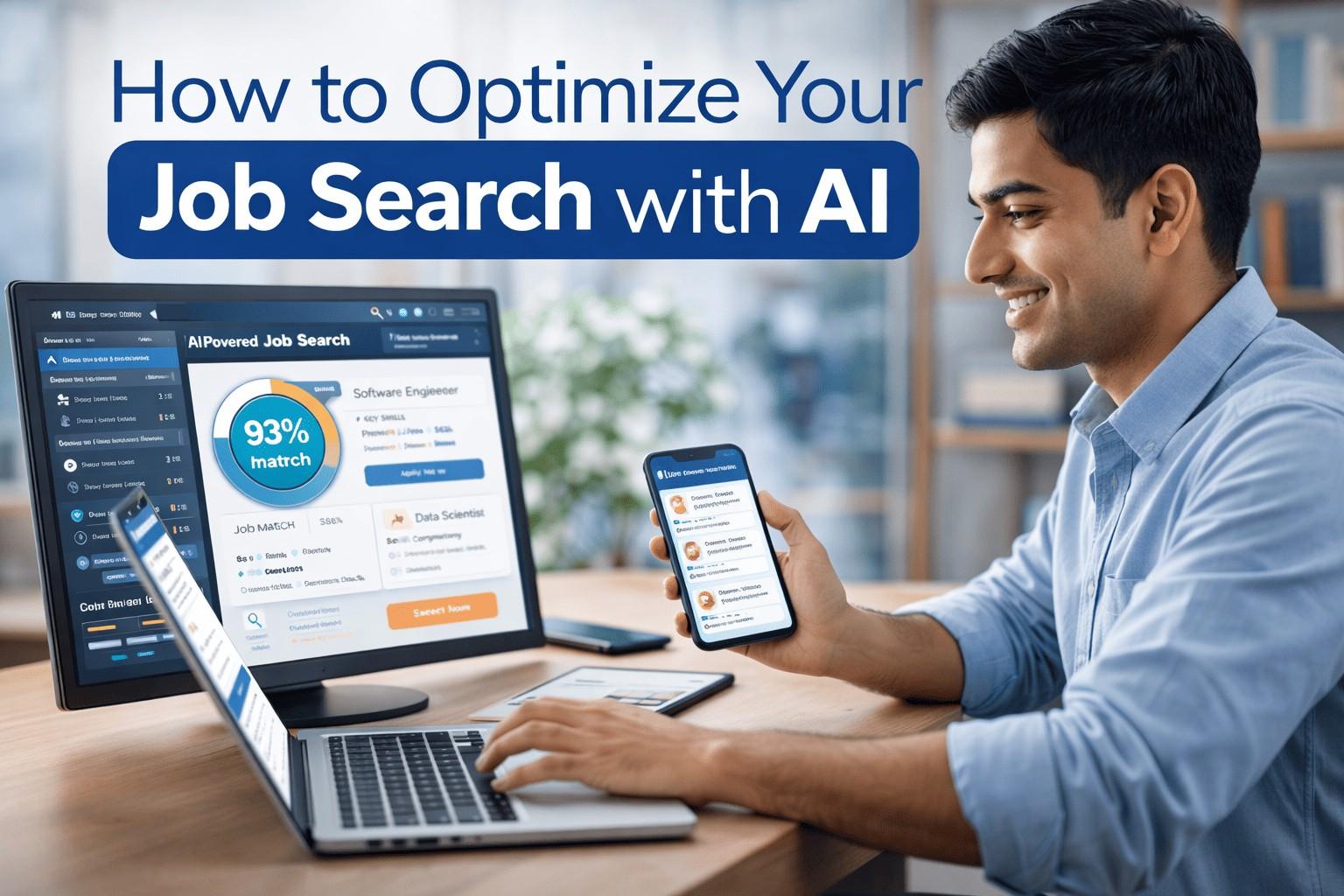
Why AI Matters in Modern Job Searching
Recruiters today rely heavily on Applicant Tracking Systems (ATS) and AI screening tools to shortlist candidates. Platforms powered by companies like LinkedIn and Indeed use algorithms to recommend candidates and rank applications.
If recruiters are using AI to screen you, it makes sense to use AI to prepare yourself.
AI helps you:
1. Use AI to Build an ATS-Optimized Resume
One of the biggest reasons candidates get rejected is poor resume optimization. Most companies use ATS software that scans resumes for keywords, skills, and relevance.
How AI Helps:
-
Identifies important keywords from job descriptions
-
Suggests better phrasing
-
Removes redundant information
-
Improves formatting clarity
AI writing tools powered by companies like OpenAI and Anthropic can help rewrite resume bullets to be achievement-focused and keyword-rich.
Example:
Instead of writing:
“Responsible for sales.”
AI can suggest:
“Increased quarterly sales by 25% through targeted client engagement strategies.”
This improves both ATS compatibility and recruiter appeal.
2. Get Personalized Job Recommendations
Modern job platforms use AI algorithms to analyze your profile and suggest relevant opportunities.
Optimization Tips:
The more data you provide, the better AI systems can match you with suitable roles.
3. Analyze Job Descriptions with AI
Instead of applying blindly, use AI to evaluate job descriptions.
You can:
AI can summarize long job descriptions and highlight critical requirements, saving hours of manual analysis.
4. Enhance Your LinkedIn Profile with AI Insights
Your LinkedIn profile is often the first impression recruiters see.
AI tools can help you:
Since recruiters search using keywords, profile optimization significantly improves visibility.
5. Prepare for Interviews Using AI Simulations
Interview preparation has become smarter with AI-driven mock interviews.
AI tools can:
You can practice behavioral, technical, and situational questions without scheduling real interviews. This reduces anxiety and improves performance.
6. Track Applications with Smart AI Tools
Applying to multiple roles can become chaotic. AI-powered tracking tools help you manage your job search efficiently.
Features include:
This helps you identify which types of roles yield better responses.
7. Identify Skill Gaps and Upskill Strategically
AI can analyze your resume and compare it to market demand.
It can suggest:
-
In-demand skills
-
Certifications to pursue
-
Learning resources
-
Career transition paths
For example, if you're in marketing, AI may suggest learning AI-driven analytics or automation tools to stay competitive.
8. Automate Cover Letter Creation
Writing customized cover letters for each job can be time-consuming.
AI tools can:
-
Generate personalized drafts
-
Align content with job descriptions
-
Maintain professional tone
-
Optimize for keywords
However, always review and personalize before submission to avoid generic content.
9. Improve Job Search Strategy with Data Insights
AI-driven career platforms provide analytics such as:
This helps you:
10. Use AI Responsibly and Strategically
While AI is powerful, over-dependence can hurt authenticity.
Best Practices:
-
Always personalize AI-generated content
-
Avoid copying generic answers
-
Keep your unique voice
-
Double-check factual accuracy
Recruiters can detect overly robotic responses. AI should enhance your job search—not replace your personality.
Common Mistakes to Avoid
-
Applying to too many irrelevant jobs
-
Using identical resumes everywhere
-
Ignoring keyword optimization
-
Overusing AI without editing
-
Neglecting networking
Remember, networking still plays a major role in hiring success.
The Future of AI in Job Searching
In 2026 and beyond, AI will become even more integrated into recruitment systems. We may see:
-
Real-time AI career advisors
-
Predictive job fit scoring
-
AI-powered salary negotiation tools
-
Personalized career roadmaps
Candidates who adapt early will stay ahead in competitive markets.
Final Thoughts
Optimizing your job search with AI is no longer optional—it’s essential. AI tools help you create stronger resumes, identify better opportunities, prepare confidently for interviews, and make data-driven career decisions.
The key is balance. Use AI as a smart assistant, but ensure your applications reflect your authentic experience, skills, and personality.
Job seekers who combine AI efficiency with human authenticity will dominate the job market in 2026. |